The height rule
On each step a block can climb at most its own height, that is, onto something one block high. It can go down as far as it likes.
Each floor is two block-heights above the previous one, so a block standing on the first floor can't go straight up to the second: it needs something in between.
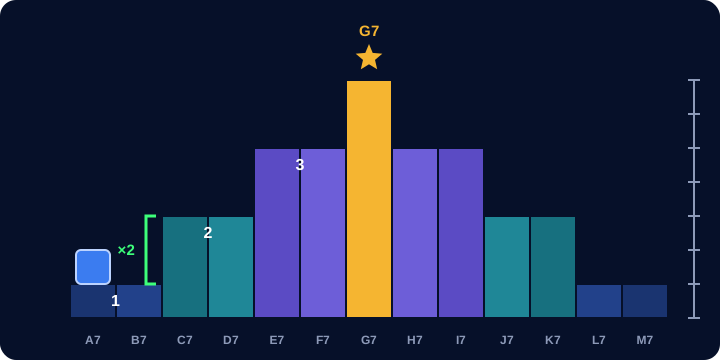
The step
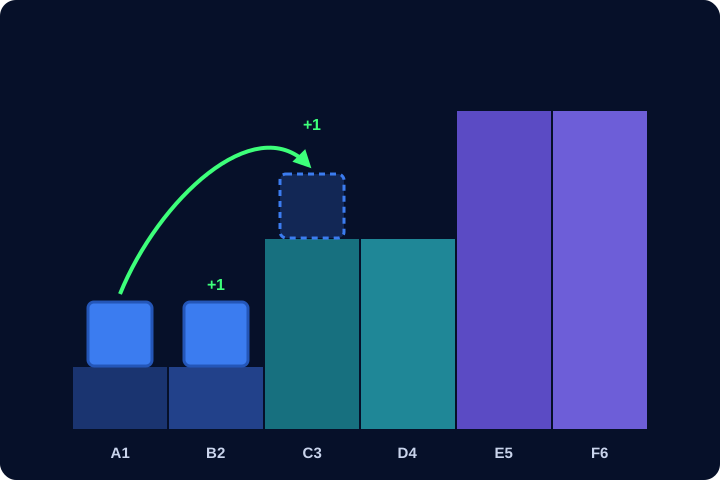
That something is another block on an inner square, next to the floor above. The climbing block passes over the step and reaches the higher floor in the same move.
Example: a block on A1 and another on B2. The block on A1 moves diagonally: over B2 (up one height) and onto C3 (up another height, now on the second floor). The step can be yours or your opponent's.
Doubling up and double steps
A block standing on another block already has the extra height it needs, so stacking one of your blocks on another (doubling) lets the top one climb next turn without a step. And with a step on the first floor and another on the second along the same line, a block can climb two floors in one move: from A1 to E5 along the diagonal, over B2 and D4.
Frequently asked questions
Why can't I climb to the second floor?
Because each floor is two block-heights higher and a block only climbs one per step. Pass over a block that acts as a step.